Random header image... Refresh for more!

Dangerous, manageable or hard-core?

The unfortunate death of a 20-year-old Sydney woman in 2007 provided a catalyst for my analysis of how online drug-using communities defined PMA and ecstasy. PMA or para-methoxyamphetamine is structurally similar to the phenylethylamines (MDxx) and mescaline. It is a hallucinogenic stimulant with a low threshold for overdose, making it definitively more dangerous than pure MDMA. Most, but not all, use of PMA is inadvertent, as the users believe they are consuming an MD derivative when they buy pills sold as ‘ecstasy’, but the pill actually contains PMA.

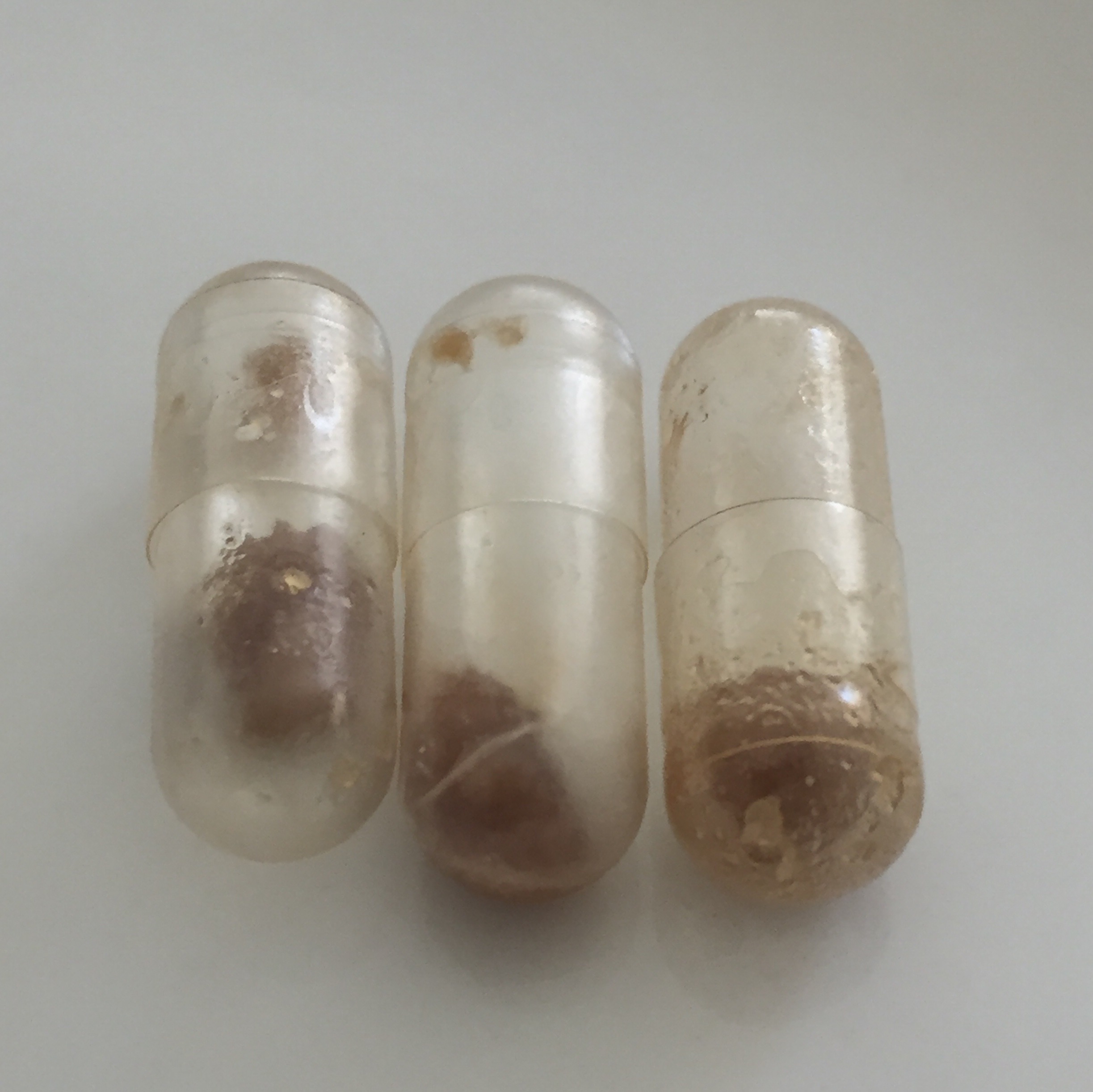
Annabel Catt’s death in 2007 followed her ingestion of ‘ecstasy caps’ which were later found to contain PMA. Her friends did call an ambulance but Annabel died later in hospital due to overheating and respiratory failure.

There were a range of public responses to Annabel Catt’s death. Police warned the public about the dangerousness of all illicit drug taking. Toxicology results were released indicating PMA in Annabel’s system and police released the testing results from seized capsules and pills indicating that there were PMA batches in circulation at the time.

Bluelight.ru and Pillreports.com issued warnings to their users about how to deal with pills sold as ecstasy and PMA. Australian Bluelight moderators wrote an email on the topic which was also distributed across many of the forums I was monitoring. The re-posted email generated much discussion across these different groups.

I identified three different discourses around ecstasy and PMA in these responses, as indicated in the title of this post: dangerous, manageable, and hardcore.

The first discourse ‘A dangerous drug’ is a familiar, dominant discourse that positions all illicit drug use as inherently aberrant. This discourse underpins prohibition and it disrupts attempts to reduce harm by denying any possible lower-risk drug use. The ‘dangerous drug’ discourse is problematic because within it, the notion of pleasure is absent, and all drug use, regardless of context, is positioned as problematic. This discourse was found mainly in the media and police public responses to Annabel Catt’s death.

The second discourse ‘harm reduction’ recognises that people will continue to use drugs, that some drug practices are riskier than others, and that people who use drugs can and should act to reduce risks. Drug-related harms are seen as manageable. The harm reduction discourse draws on notions of neoliberal self-responsibility; that is, individuals must look after themselves and ‘do the right thing’, especially in relation to keeping themselves healthy. There was also a communitarian ethic present in the harm reduction discourses around taking responsibility to look after your friends. The harm reduction discourse was the dominant discourse in the drug-user online settings involved in this project.

The third discourse redefined the ‘dangerous drug’ or ‘manageable risk’ as ‘fun’. Rather than being a reason to avoid PMA, the fact that it was described as a ‘strong psychedelic stimulant’ was seen as a positive or as a challenge. For the drug users employing this discourse, pleasure and fun were privileged above risks and harms. In fact, pleasure and fun may indeed derive directly from the riskiness of a drug practice. For these individuals, defining PMA as ‘fun’ or ‘hard-core’ can be seen as an act of health resistance and using PMA intentionally can be seen as an act of defiant consumption, and the rejection of neoliberal values and the health imperative. The ‘PMA sounds fun’ discourse was present in the responses to the Bluelight email re-posted to the numerous dance music forums involved in this project.

These three discourses illustrate that drugs are more than their pharmacology: their effects and meanings are under construction and online settings are one place where that ongoing negotiation of meaning occurs. The implication for drug policy is that we cannot assume that if people were ‘better informed’ they would choose not to use drugs. Pleasure and fun may be more highly valued than health in some cases. We need to think further about how to include people who are actually attracted to danger in our frameworks, rather than assuming that everyone is determined to look after themselves.

At the APSAD in Hobart, I presented a paper from my PhD called ‘PMA sounds fun’: Negotiating contested meanings of PMA in online settings. You can view the 15 minute vimeo here. This article is a shorter summary of this work: I am working on the full paper which will be submitted for peer-review in the next month. This article has also been reproduced at Global Drug Survey, where I am now part of the international advisory committee.

December 7, 2011   No Comments

Discretion or promotion? Reporting back from EGA

Last weekend, I had the pleasure of presenting my work at the Entheogenesis Australis (EGA) outdoor psychedelic symposium. For those unaware of EGA:

Entheogenesis Australis is a not-for-profit association that cultivates a supportive environment to foster mature, open discussion about psychoactive plants and chemicals. We seek to explore ways to assess societal impacts and examine the positive applications of such substances.

For those unfamiliar with the term Entheogen, I found the following paragraph to be a useful explanation – from p. 172 of Blom, Jan Dirk. (2010). A dictionary of hallucinations. New York, NY: Springer.

Entheogen

The term entheogen comes from the Greek words en (within), theos (god), and generare (to generate, to bring forth). It translates as ‘becoming divine within’. The term entheogen refers to a hallucinogen or other psychoactive substance believed to occasion a spiritual or mystical experience, similar to those in traditional shamanic rituals. The term entheogen was introduced in or shortly before 1979 by the American classical scholars Carl Anton Paul Ruck (b. 1935) et al. as an alternative for terms such as hallucinogen, phantasticum, eideticum, psychotic, and psychedelic. The reason for coining this neologism was the authors’ dissatisfaction with the usual connotations of the latter terms, especially in contradistinction to the shaman’s striving for “transcedent and beatific states of communion with deity”. As Ruck et al. state, it would be “incongruous to speak of the shaman’s taking a ‘psychedelic’ drug”. Some examples of traditional entheogens are ayahuasca, cannabis, ibogaine, kava, opium, psilocybin mushrooms, peyote, salvia, and tobacco. Today a person intentionally employing an entheogen for the purpose of exploring the psyche may be called a psychonaut.

So, I found myself at EGA to be surrounded by fellow psychonauts. I felt as though I was part of a community of broadly like-minded people: while we all came from different perspectives, we shared an interest in and a reverence of psychedelic or entheogenic experiences, whether they be brought on by the ingestion of plants/drugs or through other methods (eg. meditation, yoga, breath work, etc.).

In my everyday life, I can ‘pass as normal’ in the ‘straight’ world. I don’t have dreadlocks or wear a set style of clothing that differentiates me from the run-of-the-mill folk going about their business in Melbourne’s inner city. I like being able to pass through different worlds relatively easily.

But what I realised at EGA was how good it can feel to be among similar others and to be able to express freely your agreement with otherwise taboo topics.

There is a tension, however, which ran throughout EGA and which continues to run within my life. The tension is between discretion and promotion. Being discreet about one’s own use of entheogens (or psychedelics or just ‘drugs’), keeping it hidden, ‘passing as normal in the straight world’, is one way of infiltrating and hopefully, one day, being able to change power structures of the status quo.

But does this work? Can you sustain your opposition when you are constantly suppressing it? Does power corrupt? In a more personal example, can I continue to do the work that is important to me in the face of funding pressures to do work that serves, rather than challenges, the status quo? So far I’m ok, but I know I’ll be faced with this very challenge one day, probably one day soon.

The other option is promotion. Well, perhaps promotion is too strong a word. But if we allow ourselves to think this way, and we did at EGA, why shouldn’t we promote the entheogenic experience to more and more people? With the right set and the right setting, many more people could experience the world and their lives in radically different ways. These changed people could be enough to change the world. This is exactly why the promotion of these experiences is suppressed – if enough people truly understood that their lives could be radically different, the current power structures would be seriously challenged.

The discretion/promotion tension continues for me and for many others who I spoke to at EGA. People deal with it differently. I have this blog and it has my name on it. I explore these ideas publicly and am willing to wear the potential consequences of being honest. I’m not perfect: I wish I could do more. But, really, we must recognise that drug experiences are not all bad. In fact, they aren’t even bad at all. This is the key part that is missing in public debate. (Edit: ‘In fact, they aren’t even bad at all’? This statement could be misinterpreted. Drug use can cause harm, no doubt about that. But I don’t believe it is helpful to demonise the drug itself, when it is how these substances are used and the context within which they are used that combine to make harm or to avoid harm.)

A highlight of EGA was meeting Fire and Earth Erowid, founders of erowid.org. Lovely people, very smart and lots of fun. Fire and Earth’s first presentation on the Heaven and Hell of tripping illustrated that even the worst of the worst tripping experiences are not necessarily all bad. Many people who have a self-described bad trip feel that they have learnt important information about themselves through the experience. Heaven and Hell often occur within the same tripping experiences. Part of what we learn when we take the psychonautic path is how to cope with negative as well as positive emotions and experiences. All of these experiences affect our baseline levels: the possibilities we have for living and being.

Another tension for me at EGA was the choice of term ‘entheogen’ and the discussion of spiritual, religious or shamanic use. To me, it seems somewhat elitist to disregard use of drugs for other reasons, such as just for pleasure, for relaxation, or for inducing an ecstatic experience just because you like feeling good (rather than with spiritual aims). Then I thought more about this issue. Do you need to intentionally seek a spiritual experience to have one? When you take a drug to experience those sensations or for relaxation or for pleasure, you may also have an experience that could be described as spiritual – and this experience may then open your mind to a wider range of possibilities or subjectivities, not just while taking the substance/plant, but also at baseline.

Being in the bush and connecting to the amazing plant life and the earth had a profound effect on me. I felt strongly that listening to my initution was and is critical (A. C. Ping and Margaret Cross also emphasised this point). Through a meditation, yoga and writing workshop, I experienced the significance of feeling the grass under my bare feet – connecting with the land and the spirit. Ingesting plants grown in our surrounding is another way of connecting with the land. We have co-evolved with plants for millenia – this is not new. What is new is the denial of this symbiotic relationship between plants and human (and animal) beings.

As well as presenting my talk on the internet filter and drug websites, I also participated in a panel called ‘Beyond evidence-based drug policy’. There was much discussion but one thing that I take from that panel was the question: do we stick to our authentic message, what we really believe, that drugs/plants are beneficial and our lives are enriched by them… or do we speak within the dominant discourses on drugs so as to be heard, even though it dilutes/distorts our message?

Related to this was Carl Turney’s talk on strategies for drug law reform. Carl said that it is critical that we understand who our target audience actually is – 2 in 81 people are all that matters! These two groups of people are:
1. Pro-entheogen, swing voters, in marginal seats, who currently aren’t letting it affect their voting;
2. Swing voters, in marginal seats, who are unsure about entheogens, and could change their voting after learning more. these are the important people.
If campaigners can move opinion among these two groups, they could have political impact.

I must again thank the wonderful people who made EGA happen. I do truly hope we can do it all again in 2 years time! It was great to meet you all and I hope to stay in touch :)

December 7, 2011   11 Comments

kronicstudy.net

How do you think synthetic cannabis should be treated by the law?

You’re invited to participate in a study investigating the use of synthetic cannabis, otherwise known as Kronic, K2, Spice, Kaos, Northern Lights, Aussie Gold, Puff, Zeus, and many other brands…

You DO NOT need to be a past or current user of synthetic cannabis to be eligible for this study, and we are especially interested in hearing from people with no prior use of these drugs. However, you DO need to be at least 18 years of age and an Australian resident in
order to be eligible.

Participation in this study involves completing an online survey lasting 20 minutes. It is entirely voluntary, completely anonymous and no identifying information will be collected.

Visit the following URL to participate:
http://kronicstudy.net

For further information, contact me!
(email m.barratt@curtin.edu.au, twitter @monicabarratt, phone +61 407 778 938)

December 6, 2011   No Comments

The irony of publicity on Kronic publicity

This blog managed to get into the Melbourne mX today in the story ‘Kronic case of publicity’ on p. 5. The irony is that the story is actually an example itself of what Stephen Bright and I were talking about in our earlier post: mentions of Kronic by mainstream media fuels public interest in Kronic as shown by Google Trends data, where spikes in searches for related terms match with the pattern of major news articles on the topic.

To any new readers who may have come here via mX, welcome. Feel free to take a look around :)

November 17, 2011   3 Comments

Cannabis policy: what’s next?

On Monday and Tuesday, I attended the 1st international Cannabis Policy: Where to from here? workshop, hosted by the Microeconometrics Unit at the University of Melbourne.

According to the organisers, the aims of the workshop were

  • to shine a light on Australian cannabis policy within the context of international moves towards cannabis law reform
  • provide an opportunity for vigorous interdisciplinary discussion about some of the latest research findings
  • facilitate debate about Australias current cannabis policy environment

As would be expected the workshop had an economics feel, which novel for me. My background is in sociology and psychology, although I did do economics to Year 12 level at school. That helped slightly :)

Economic analyses that were presented included: (1) cost benefit analyses (CBA) of cannabis regulation/legalisation, both in the UK and in the Australian state of NSW, and (2) the use of household survey data from Australia analysed as a pseudo-cohort to answer questions about what might happen if cannabis were regulated/legalised.

It was interesting to reflect upon the way economists use this method to determine the balance of costs/benefits of a policy change to society at large. So, what could be seen as a benefit from the government’s perspective, increased taxes from regulating cannabis, is not counted as a benefit. Rather it is seen as a transfer (of money from individuals to government): it benefits government but taxes individuals, benefits and costs cancel each other out.

Another intriguing feature of CBA is that the benefits of drug use to the individual drug users must be accounted for if using the method as intended. Stephen Pudney noted that most CBA in drug policy are conservative in that they only consider the external costs/benefits (ignoring the internal costs/benefits). In economic terms, drug use has ‘utility’ to the drug user and this has to be taken into account to assess the true C/B of a new drug policy. I would agree!

Interestingly, using these models with their various caveats, a regulated cannabis market was of only a slight benefit to society (both in the UK and the NSW models). The group was expecting the economic benefits to be larger.

It was interesting that many in the room assumed that it was a given that cannabis use would increase in a regulated/legalised environment. Information was presented at the workshop that pointed towards the likelihood of increased use. Data in the National Drug Strategy Household Survey indicate that a fair proportion of people who have never used cannabis would try it if it were legal. But when I thought this through, I imagine that many of these people would try it but are not necessarily going to go any further. The idea that prohibition is holding back a floodgate of people from using drugs doesn’t seem valid to me.

Another problem we had was the examination of how decriminalisation of cannabis affects its uptake in Australia. Anne Line Bretteville Jensen‘s analysis of NDSHS data using a pseudo-cohort design indicated that in states where cannabis was decriminalised, people who used cannabis were more likely to try it at a younger age compared with states where cannabis was depenalised (that is, prohibited with a cautioning system). There was no evidence of greater prevalence of cannabis use solely due to decriminalising when taking into account that the states that have decriminalised already had higher rates of use.

It is concerning that such policies to decriminalise have been associated with an earlier uptake of use because earlier uptake (especially in early teens or younger) is strongly associated with greater harms.

The second day of the workshop involved some interesting presentations, including one from my supervisor Simon Lenton on the state of cannabis law reform in Western Australia and from Canadian professor Benedikt Fischer on the Lower Risk Cannabis Use Guidelines.

Of most interest to me was the 2 hour panel discussion and participant debate at the end of the workshop. Most of us seemed to agree that some kind of regulated model of cannabis control would be optimal. Of course the devil is in the details: how would that model operate, what would it look like? What are the impediments in Australia? We discussed the international conventions and the global and local politics.

A comment that struck me as pertinent was that the repeal of alcohol prohibition in the US happened at the same time as (or perhaps because of?) the Great Depression. It is likely that we are now the midst of another world depression. Perhaps this event will have a silver lining – it may make it political possible to consider the repeal of prohibition.

Before concluding this post, I want to comment on the involvement of cannabis users in cannabis policy. One academic at the workshop made the point that when law reforms were occurring, cannabis users were not organised in a way that enabled large protests: they were largely not part of the public policy struggle. The comment could be read as meaning that cannabis users don’t care about these issues or aren’t prepared to put in the effort to protest.

However, I think that would be a mistaken interpretation. Drug users are well aware of the stigma of use and the threat of arrest. I think this is why it is very difficult for people who want to protest against prohibition to stand up and be counted. Drug researchers are in a privileged position to be able to legitimately discuss these issues in public. As an example, when I posted this conference invite to the OzStoners forum, members of the forum were interested but would prefer to be able to participate in these kinds of discussions online, where they can remain anonymous and protected. The point was made at the workshop that social media is alive with discussions about drug policy. Social media may be the bridge we need to activate protest, yet protest is still hamstrung in a prohibition environment by the need to remain anonymous.

That said, it was fantastic to see representation of cannabis users at the workshop, including Chibo Mertineit from the Nimbin Hemp Embassy and Matt Riley from Cannabis Law Reform. It was fantastic to meet these two and to have their views represented in an otherwise heavily academic workshop.

Many thanks to the organisers: Jenny Williams, Robin Room and Alison Ritter. I look forward to contributing to the next workshop which was proposed for 2 years from now.

For more on this topic, I recommend reading Cannabis Policy. Moving Beyond Stalemate which was written by participants in the workshop and the conference papers, which can be downloaded from here.

November 11, 2011   3 Comments

The legal status of synthetic cannabinoids in Australia: A work in progress

This post is co-authored by my colleague Steve Bright. We recommend citing this post as:

Bright, Stephen J., & Barratt, Monica J. (2011, November). The legal status of synthetic cannabinoids in Australia: A work in progress. Drugs, Internet, Society. http://monicabarratt.net/?p=221

One of the challenges we faced when researching this paper was understanding the legal status of synthetic cannabinoids in Australia. Not only are there different federal and state frameworks, there are also many different chemicals that have been identified as synthetic cannabinoids.

While doing this research, we were only able to locate one Australian organisation that had a page about synthetic cannabinoids which included information about their legal status (The NCPIC or National Cannabis Prevention and Information Centre). We understand that NCPIC is soon to release an update to their page. Of Substance has also just published a good article on ‘the banning of synthetic cannabinoids’.

Nevertheless, we felt it was important to do our own investigation into the legal status of synthetic cannabinoids by going beyond news articles and media releases. So we accessed relevant federal and state schedules and acts to locate recent amendments.

On July 8, the TGA banned 8 synthetic cannabinoids which are thus by default illegal in all states since all the state acts refer to the Standard for the Uniform Scheduling of Medicines and Poisons (SUSMP), also known as the Poisons Standard 2011. The SUSMP contains a derivatives and analogues clause. Under this clause, the scheduling of 8 synthetic cannabinoids would also capture many other similar substances.

Nonetheless, products containing other synthetic cannabinoids not included in this list of 8 chemicals may still be legal to sell and supply in states and territories without their own analogue laws (although we are not 100% sure about this). On the other hand, other synthetic cannabinoids could be considered analogues under the federal code even if they remained legal under state codes. Confused yet? We were!

Table 1 shows the timeline of legal status for synthetic cannabinoids by state and territory. This table is clearly subject to change as the laws evolve.

Table 1: Timeline of legal status for synthetic cannabinoids by state and territory

State

Timeline of events/legislation changes

WA

14 June – WA banned 7 chemicals
5 August – WA ban another 14 chemicals, taking it to a total of 21 chemicals banned in WA. Others still may be legal to supply and possess.

SA

17 June – SA bans 17 chemicals

NSW

July 8 – NSW passed changes at the same time as the TGA legislation came into force; however, they have only scheduled the 7 that WA scheduled the first time around (JWH 073, 018, 122, 200, 250, CP47,497, & H8-CP47,497), and not the 8th chemical that the TGA scheduled (AM 694). Nonetheless, AM 694 would be covered by default through the NSW act’s reference to the federal SUSMP (the Poisons Standard).

TAS

August 2 – Tasmania has made significant changes to their legislation, introducing an analogues act, and scheduling a number of research chemicals that are not listed in the SUSMP, in addition to 4 synthetic cannabinoids

NT

August 12 – NT Banned 18 synthetic cannbinoids

QLD

QLD has proposed legislative changes, but thus far the changes have not yet been passed in parliament (note the endnote 3 on the last page).

VIC

VIC have proposed changes, but nothing has progressed.

ACT

No specific legislation was found, though the ACT’s laws refers to the SUSMP outlawing 8 chemicals. Nonetheless, the ACT government arranged to have an amnesty until 1 August 2011 when people were not prosecuted for offences related to these products.

Table 2 is our attempt to chart the scheduling of each individual synthetic cannabinoid, federally and across states and territories. Again this table is very much subject to change. (The link below leads to Table 2 in Excel hosted by Google Docs.)

Table 2: List of synthetic cannabinoids and their legal status

As the title of this post suggests, this information is a work in progress. Please speak to a lawyer if you need the assurances of accurate and up-to-date information on this issue: we provide no guarantees that our publication is correct, but we will do our best to update it. Readers are encouraged to comment and to suggest updates/edits to this information to assist us.

We noted with interest the poster displayed in a sex shop window on Bridge Road in Richmond (Victoria) last weekend boldly advertising that Kronic was available to purchase. It is clear that although the Poisons Standard includes a range of synthetic cannabinoids and others through its derivatives clause, the drug is currently still available for sale in retail outlets, at least in the state of Victoria. This situation is doubly confusing for people who buy Kronic who may believe the drug to be ‘legal’ given that a retail outlet is selling it. Is this sex shop breaching federal law by selling it? That would depend on what actual chemicals this blend contained, whether they were banned or derivatives of those banned.

The other issue we watch with interest is the trend towards state versions of derivative/analogue laws. For example, Queensland is considering the Criminal and Other Legislation Amendment Bill 2011 that would amend their Drugs Misuse Act 1986. A “dangerous drug” would also include a substance that “has a substantially similar pharmacological effect; or is intended, or apparently intended, to have a substantially similar pharmacological effect”. The idea here is for this law to enable all substances that mimic currently illegal drugs to also be deemed illegal without needing to continually schedule new chemicals. The unintended negative consequences of such a law and whether or not it would work in practice are yet to be seen.

November 9, 2011   9 Comments

Entheogenesis Australis 2-5 Dec 2011

If you feel like a weekend in the Strathbogie Ranges (Vic) at the beginning of December, come camp with us and open your mind ;)

I’m lucky enough to be speaking for a whole hour! So will be going into a bit more depth on the thesis stuff and the internet filter, but also new work on Silk Road… the online drug marketplace that makes the whole concept of internet filtering obsolete… should be fun :)

http://www.entheo.net/lecture/monica_barratt

October 22, 2011   No Comments

Lisa Pryor’s small book on drugs

Thanks to Lisa Pryor for bringing the hypocrisy of our drug laws into the public debate through her new book, A small book on drugs.

Check out the Triple J Hack story [mp3] – featuring the director of my institute, Professor Steve Allsop, and ABC Life Matters.

August 3, 2011   2 Comments

Communities and Technologies presentation

I’ve just presented at #comtech2011

Here is the Prezi – which you can use/edit yourself if you like.

Here is the video I made for my dry run yesterday on Vimeo.

Thanks C&T – it’s been a fantastic experience, and I’ve met some amazing people and have definite plans for future collaborations.

More on that after my Qld holiday!

July 2, 2011   No Comments

Twitter for drug trend monitoring

Today I participated in the workshop Making sense of Twitter at the Communities and Technologies conference in Brisbane. My contribution was simply the idea that Twitter could be used in drug trend monitoring, as explained below:

Some people are using the internet to seek drug-related information, share their drug use stories with like-minded others, and buy pharmaceutical and novel substances marketed as herbs or ‘legal highs’. Researchers have responded to this trend by conducting monitoring studies, including tracking websites that sell psychoactive substances (e.g., ‘Psychonaut project’, Schifano et al., 2006) and analysing the contents of online discussion among people who use drugs (e.g., ‘Real drugs in a virtual world’ project, Murguía, Tackett-Gibson, & Lessem, 2007). Apart from Lange et al.’s (2010) study of YouTube videos depicting young people using the hallucinogen Salvia, there has been little research into the use of social media to share drug information and to advertise websites that sell psychoactive substances.

Using 140kit, I collected Tweets that contained the word ‘mephedrone’, the name of an amphetamine-type substance that was banned in the UK in 2010 and is banned under the Analogues acts in Australia. 360,755 tweets were posted by 217,739 Twitter accounts in one week during March 2011. Browsing through a small selection of these Tweets indicated that most of them purport to sell mephedrone and include URLs to vendor websites, while smaller proportions could be categorised as news, policy and research about the drug, as well as casual discussion among people who appear to use the drug. I can see the potential for a number of studies using these data from Twitter. Drug trend monitoring could be enhanced by setting up a system to store and count the number of tweets containing drug terms, tracking trends over time. Tweets could be scanned for ‘new’ drug terms for which new searches and monitoring may be instigated. Geolocation may assist in understanding the potential for that drug being used in specific parts of the world. Hashtag analysis may indicate social networks of people who discuss these drugs. Analysis of Twitter could feed into current attempts to monitor drug vendor websites, as the purpose of most Tweets is to encourage sales. Through this collection, I also stumbled across a video-sharing site designed to share videos of ‘funny tripz’ using ‘legal highs’. Monitoring sites like FunnyTripz and YouTube could also assist in drug trend monitoring, especially in tracking the existence and use of new legal highs that are yet to come to the attention of health and legislative departments.

So, what did we learn in the workshop?

Firstly – I learnt about this tool called Pirate Pad, which is like a public whiteboard that anyone can edit – what a fantastic tool for collaboration. For our Pirate Pad for this workshop, see http://piratepad.net/B9kg8sNSGL

I will save a version of this piratepad in case the link fails later down the track, but basically all the links are there. Axel Bruns and Jean Burgess at Mapping Online Publics shows us their process of extracting twitter datasets, cleaning and preparing them, and then analysing and visualising them.

We also heard from a selection of researchers with alternate approaches to Twitter analysis, including Cornelius Puschmann‘s research group who introduced the ideas of small vs big data, and emphasised the importance of qualitative analysis to inform quantitative and network analysis of (what are often) huge datasets.

Aneesha Bakharia from QUT also spoke about algorithms for the thematic analysis of twitter data. It appeared to me that her tools identify underlying themes using a combination of quantitative analysis with qualitative inspection of the results and therefore could be used with large scale data.

I now feel armed with a set of freely available tools (licensed Creative Commons, thanks Axel!) to play around with the idea of using Twitter for drug trend monitoring and ultimately to fund a project to make this happen. And there is also a network of potential collaborators to help me do it.

Yay! :)


Websites
140kit mephedrone tweets – http://140kit.com/tronica/collections/3028
Funny tripz – http://www.funnytripz.com

References

June 29, 2011   No Comments